Dallas Art Scene 2026: Where to Start
From the DMA's blockbuster Lichtenstein acquisition to the gallery row in the Design District, Dallas is building a scene that rewards exploration.
Michael Barera · CC BY-SA 4.0
Dallas has always had money for art. What it hasn't always had is an identity. Houston has the Menil and the rawness of Sawyer Yards. Austin has the weirdness. Marfa has the myth. Dallas, for a long time, was perceived as the city where wealthy people bought art but didn't necessarily make it.
That's changing, and 2026 is a good year to pay attention.
## The Arts District
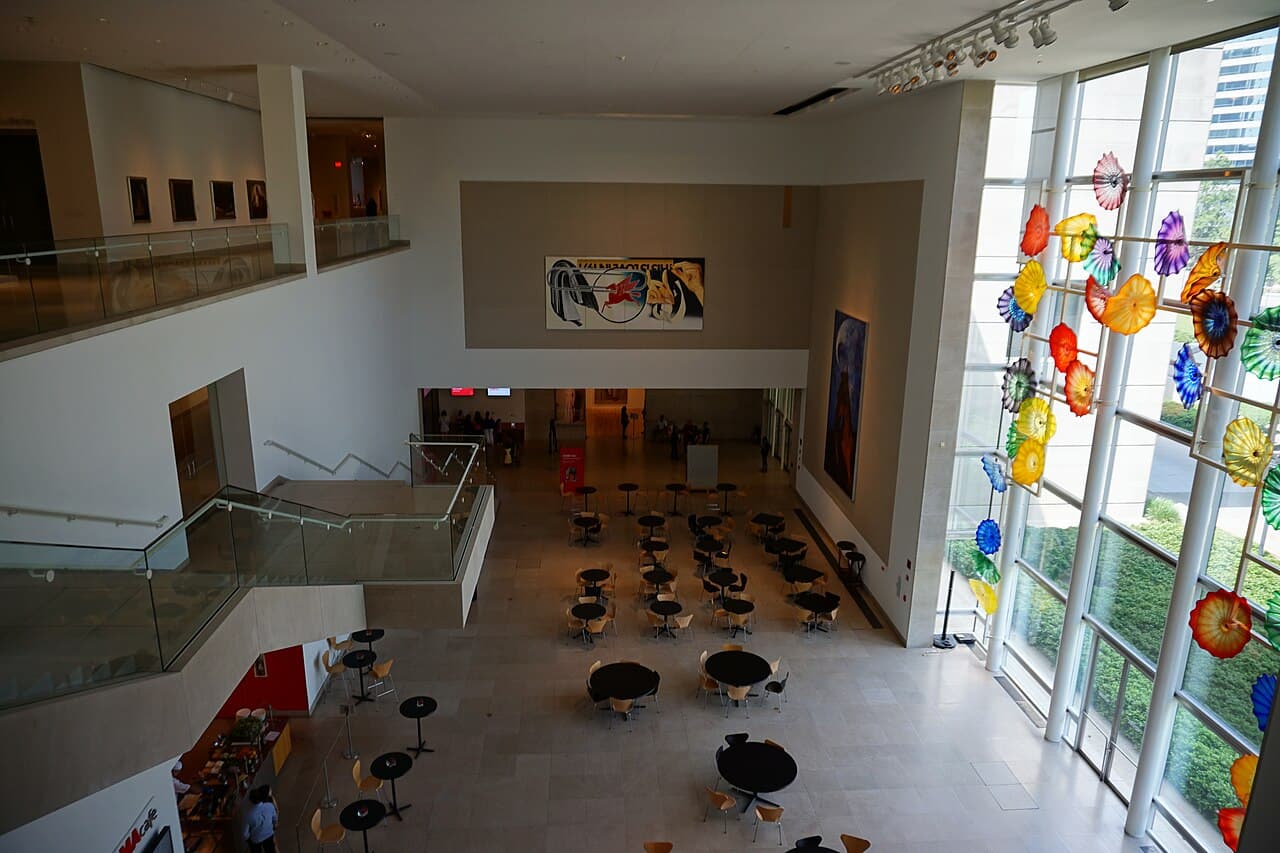
The Dallas Museum of Art — always free — anchors one of the largest contiguous arts districts in the country. This summer the DMA is showing "X Marks the Spot," celebrating Brand X Editions with prints by KAWS, Rashid Johnson, Glenn Ligon, and Adam Pendleton. "Samurai to the Imperial Court" displays Japanese metalwork with quiet precision.
The Nasher Sculpture Center, designed by Renzo Piano, sits adjacent. The "Nic Nicosia: Everyday Surreal" survey covers 25 years of the Dallas artist's work, and the joint DMA-Nasher acquisition of more than 50 Lichtenstein works is the most significant shared purchase either institution has made.
The Crow Museum of Asian Art, free and underrated, rounds out the district with Du Chau's piano-wire-and-porcelain sculptures.
## The Design District
The Design District is where Dallas's identity is forming. Conduit Gallery, founded by Nancy Whitenack forty years ago, shows Catherine Howe's large-scale paintings. Barry Whistler Gallery has "Welcome to Texas" — sixteen Texas artists defining a regional aesthetic. And Liliana Bloch Gallery has Leigh Merrill's constructed-landscape photography.
These aren't vanity galleries. They're the spaces where Dallas's artistic identity is being negotiated in real time.
## Deep Ellum
For street art and a less institutional vibe, Deep Ellum's pop-up gallery initiative places artists in vacant storefronts. The Dallas Art Fair each April draws New York and L.A. galleries. Dallas rewards patience.