Megan Olivia Ebel: RUBY Projects & Revolver Galeria
Through Revolver Galeria and RUBY Projects' La Ruche HTX residency, the Canadian-born curator is building bridges between Houston and the world.
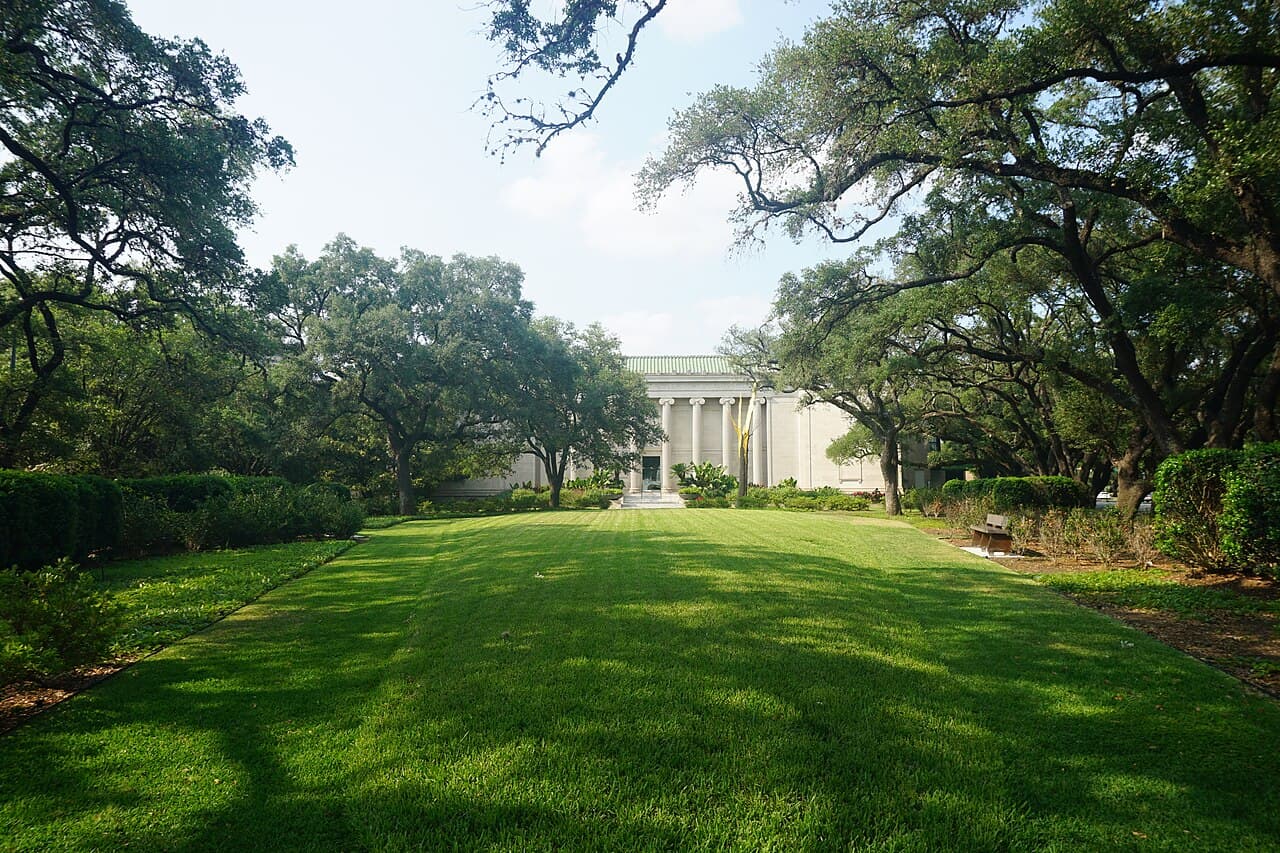
Michael Barera · CC BY-SA 4.0
There's a 1920s house in Houston's Museum District that most people walk right past. No flashy signage, no neon, no line out the door. But step inside La Ruche HTX — the residency arm of RUBY Projects — and you'll find yourself in one of the most quietly ambitious art spaces in Texas. "You're welcome to my home, make yourself comfortable, and let's look at some art," is how Megan Olivia Ebel describes what happens when you walk through the door.
Ebel, the Canadian-born curator, USPAP-certified appraiser, and practicing artist who founded RUBY Projects, has a way of making the improbable feel inevitable. Over the past several years she has curated more than fifty exhibitions, launched a residency modeled after the historic La Ruche artist enclave in Paris, opened Revolver Galeria on one of Houston's most storied gallery addresses, co-founded a Houston-to-Mexico City exchange called No Mames CDMX, and chaired the Orange Show's 44th annual fundraising gala — all while maintaining the kind of intimate, artist-first ethos that larger institutions struggle to sustain. Whitewall has covered her work as part of a broader story about how curator-led spaces are reshaping the American gallery landscape.
"The through line is connection," Ebel told Whitewall. "Creating bridges between experimental practices and patrons, between artists and new publics, between Houston and Mexico City, between residency intimacy and visibility in fairs or institutional shows."
## From Vancouver to Houston by way of everywhere
Her background reads like a novel. Originally from Vancouver, she studied studio art at Sewanee: The University of the South, then spent years moving through residencies and gallery positions across Sudan, China, and France before landing in Houston. Early career stops included teaching fine arts at Yes Prep and KIPP Texas public schools, followed by a directorial role at a Houston gallery that propelled her to launch her own initiative. She has worked in art spaces for over fifteen years — representing emerging local artists, managing and brokering client collections on the secondary market, and earning her USPAP appraiser certification along the way. She also serves on the board of Art League Houston, the city's oldest arts organization.
Her parents, she told Voyage Houston, "instilled in her a commitment to inclusion, accessibility, and amplification of underrepresented voices." She describes herself as a "triple threat" — artist, collector-curator, and dealer — and sees the overlapping perspectives as essential to how RUBY operates: every program is shaped by understanding what it means to make work, to live with it, and to move it into the world.
## La Ruche HTX: the house that became a laboratory
La Ruche HTX is Ebel's former residential home, a restored 1920s house near Hermann Park that she converted into a private residency program. The space continues a historical legacy of artist houses in the neighborhood dating back a century. It pairs Houston-based artists with national and international talent for one-to-three month residencies, specifically supporting multidimensional practitioners — those working in new media, computational art, installations, social practice, or performance.
It's the kind of program that doesn't just give artists studio space; it gives them context. Residents work alongside each other in the house's converted rooms, and exhibitions grow organically from the collisions between their practices. The residency feeds directly into gallery partnerships and market opportunities — graduates leave with critical framing, collector relationships, and exhibition momentum that didn't exist before they arrived.
PaperCity called it "a haunt for art world insiders with true creative gems." That tracks. The space is deliberately intimate — you might find yourself at a collaborative dinner with a Michelin-level chef one week, a DJ set at one of RUBY's SunSets parties the next, and a rigorous curatorial walkthrough the week after that. Ebel rejects the separation between art world and everyday life. She integrates contemporary art into homes, kitchens, neighborhoods, and nightlife, creating multiple entry points for audiences who might never set foot in a white cube gallery.
## Revolver Galeria and the Latin American conversation
Revolver Galeria, at 2012 Peden Street, extends the mission into a more traditional gallery format — but on one of Houston's most charged addresses. The space formerly housed Texas Gallery, one of the city's most influential galleries for decades. Ebel's decision to take over the address was deliberate.
The inaugural exhibition, "Nomos," grappled with territory and belonging — when land transcends surface and becomes identity, when *terra* becomes *-orium*: a ground charged with belonging. It set a high bar. More about the Nomos show. It's the kind of intellectually rigorous, politically aware programming that Ebel gravitates toward — and that positions both spaces within Houston's broader conversation about Latin American art. Houston's growing role as the U.S. capital of Latin American art gives that conversation real institutional weight.
## The Mexico City axis
The Houston-Mexico City connection isn't an afterthought — it's structural. Ebel co-founded No Mames CDMX, a curatorial platform that establishes a permanent axis between the two cities for artist, collector, and institutional exchange. The Mexico City space is preparing to open, and when it does, RUBY will operate simultaneously in both cities — a genuine binational gallery infrastructure, not a one-off cultural exchange.
"I'm always thinking about how we sustain what's weird and urgent and beautiful," Ebel told Whitewall. The Mexico City arm is the clearest expression of that thinking at scale. Houston's position as a cultural gateway to Latin America makes the corridor obvious in retrospect, but it took someone willing to build the actual infrastructure — the residencies, the gallery relationships, the collector pathways — to make it real.
## What Houston gets right
Ask Ebel about Houston's art scene and she'll tell you something that surprises people from New York or Los Angeles: "Houston rewards initiative over pedigree. The city is patron-driven and pluralist. You can experiment with hybrid models — and the city has the space and the appetite for all of it."
She's right. Houston's diversity and what she calls "outsider taste" create a porousness across social and cultural boundaries that more established art cities lack. The city doesn't have a single dominant gallery district or a rigid hierarchy. It has the Menil Collection and CAMH and the MFAH, but it also has 400 working artists at Sawyer Yards and a converted shotgun-house art project in the Third Ward. The ecosystem is genuinely wide.
But Ebel also sees gaps. Mid-career infrastructure is thin — artists often leave Houston after their emergence but before institutional establishment, pulled to New York or Berlin by the gravitational force of older markets. And younger collectors need accessible entry points beyond the traditional gala-and-auction circuit, which is part of why RUBY's programming intentionally blends art with food, music, and social events.
## The long view
Ebel's vision for Houston by 2035 is specific: a "braided ecosystem" where artists sustain themselves locally without relocating, galleries achieve international circulation, institutions commission ambitious new work, younger collectors fund initiatives beyond acquisitions, and the cross-border exchange with Mexico City deepens into something permanent. She wants Houston to stop being a city with a great art scene and start being a city that exports cultural models globally.
She's not alone in thinking it's possible. But she might be the person most actively building the infrastructure to make it happen — one residency, one exhibition, one bridge at a time.
Revolver Galeria is located at 2012 Peden St, Houston, TX 77019. La Ruche HTX is at 1705 Ewing Street in the Museum District, open Wednesday through Friday 11am–3pm and Saturday 1–6pm.