Southtown First Friday: San Antonio Art Walk Guide
Southtown and Blue Star: San Antonio's gallery district from First Fridays to Ruby City, all walkable.
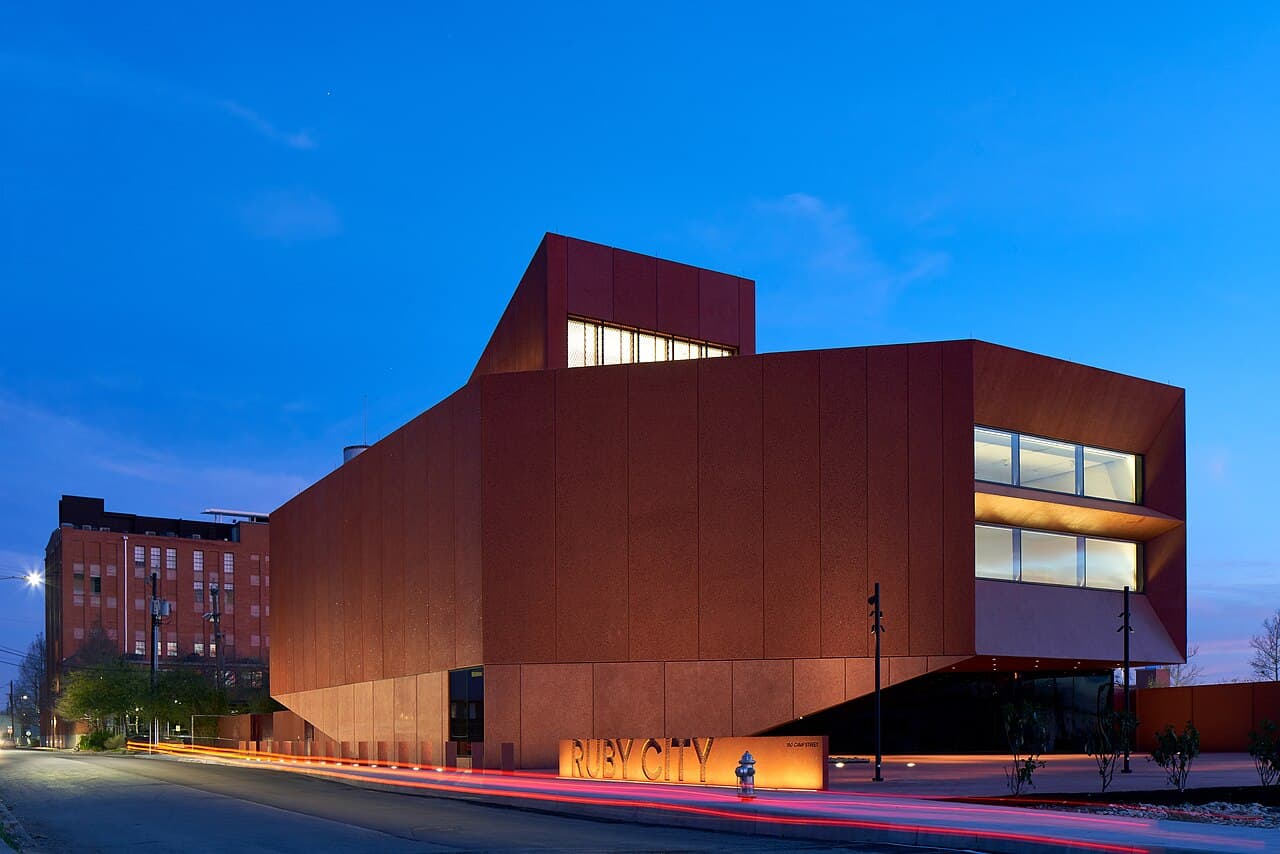
Rubycityart · CC BY-SA 4.0
The first First Friday happened in 1994. Galleries in Southtown — San Antonio's arts-and-culture neighborhood south of downtown, hugging the river — decided to stay open late on the first Friday of each month, pour some wine, and see who showed up. Thirty years later, they're still doing it, and the answer to "who shows up" is "everyone."
First Friday in Southtown is not a curated event. It's not a museum program. There's no single institution running it, no ticket booth, no VIP list. It's a neighborhood tradition — the galleries open their doors from 6 to 10pm, live music spills out of storefronts and parking lots, food vendors set up on the sidewalks, and the streets between South Alamo and the river fill with a crowd that includes serious collectors, students from UTSA and the Southwest School of Art, families with strollers, and couples on dates. The fact that it's survived for three decades without corporate sponsorship or institutional management is itself a kind of statement about what San Antonio values.
## Blue Star Arts Complex
The anchor is the Blue Star Arts Complex at 1420 South Alamo Street — a converted warehouse that has been the center of San Antonio's gallery scene since the mid-1980s. The building houses Contemporary at Blue Star, the nonprofit exhibition space that anchors the complex with five shows rotating quarterly. The curatorial program is serious — group shows, solo surveys, and thematic exhibitions that engage with regional and national conversations — and the space itself is generous: high ceilings, concrete floors, and the warehouse proportions that let large-scale work breathe.
FL!GHT Gallery, also in the Blue Star complex, represents emerging and mid-career artists with a program that leans toward painting, photography, and mixed media. Over a dozen independent studios fill the rest of the building — working artists who open their doors during First Friday and sell directly to visitors. The mix of institutional exhibition space, commercial gallery, and working studios under one roof gives Blue Star a density that most arts complexes don't achieve. You can see a curated show, buy a painting from the artist who made it, and watch someone else start a new one, all without leaving the building.
## Along the River
Blue Star sits along the San Antonio River, and the River Walk extension through Southtown connects the arts complex to the broader neighborhood in a way that feels organic rather than planned. Walking south from Blue Star, you pass galleries, restaurants, and bars that have colonized the storefronts of King William's Victorian houses and Lavaca's Craftsman bungalows. The neighborhood's residential architecture — some of the most beautiful in Texas — gives Southtown a human scale that downtown's convention-center sprawl doesn't have.
Second Saturday events extend the weekend programming for visitors who can't make First Friday. The energy is slightly different — more family-oriented, less nightlife — but the galleries are open and the neighborhood is walkable.
## The Walk to Ruby City
Here's the thing that makes Southtown's gallery scene genuinely distinctive: you can walk from Blue Star to Ruby City in ten minutes. David Adjaye's crimson building — precast concrete embedded with red Mexican soil, housing 1,400 works from the Linda Pace Foundation, always free — sits at 150 Camp Street, a straight shot north from the Blue Star complex. The walk takes you through the King William Historic District, past Victorian mansions and live oaks, along streets that feel more like a small Southern town than a Texas metropolis. Our full guide to Ruby City covers the building, the collection, and the current exhibitions.
The ten-minute walk from Blue Star to Ruby City is, quietly, one of the best art walks in Texas. You go from a converted warehouse full of working artists to a David Adjaye masterpiece, passing through a historic neighborhood that's been part of San Antonio's cultural life for over a century. No rideshare required. No parking garage. Just sidewalks, live oaks, and the particular quality of South Texas light that makes everything look a little more beautiful than you expected.
## The Southtown Ecosystem
Southtown encompasses more than Blue Star. The King William Historic District — San Antonio's first residential historic district — is home to galleries, bed-and-breakfasts, and the McNay Art Museum (technically in Alamo Heights, but often visited as part of a Southtown day). The Lavaca neighborhood, adjacent to King William, has its own cluster of galleries and studios. And the Briscoe Western Art Museum, on the River Walk just north of Southtown, shows Western art and Texas history in a way that connects the region's artistic traditions to its cultural identity.
First Friday starts at 6pm. The closest thing to a block party that doubles as a gallery opening — that's the phrase people use, and it's accurate. Bring comfortable shoes. Park once. Walk.
Blue Star Arts Complex is located at 1420 S. Alamo St, San Antonio, TX 78210. Contemporary at Blue Star is free. First Friday happens the first Friday of every month, 6-10pm. For the full picture of San Antonio's art scene, our guide to the city's five essential spaces covers Ruby City, SAMA, the McNay, and the Briscoe alongside Blue Star.