Dallas Art Fair 2026: Sales, Collectors, and Quilts
Dallas Art Fair 2026: record sales, six DMA acquisitions, and the most interesting art market story in America.
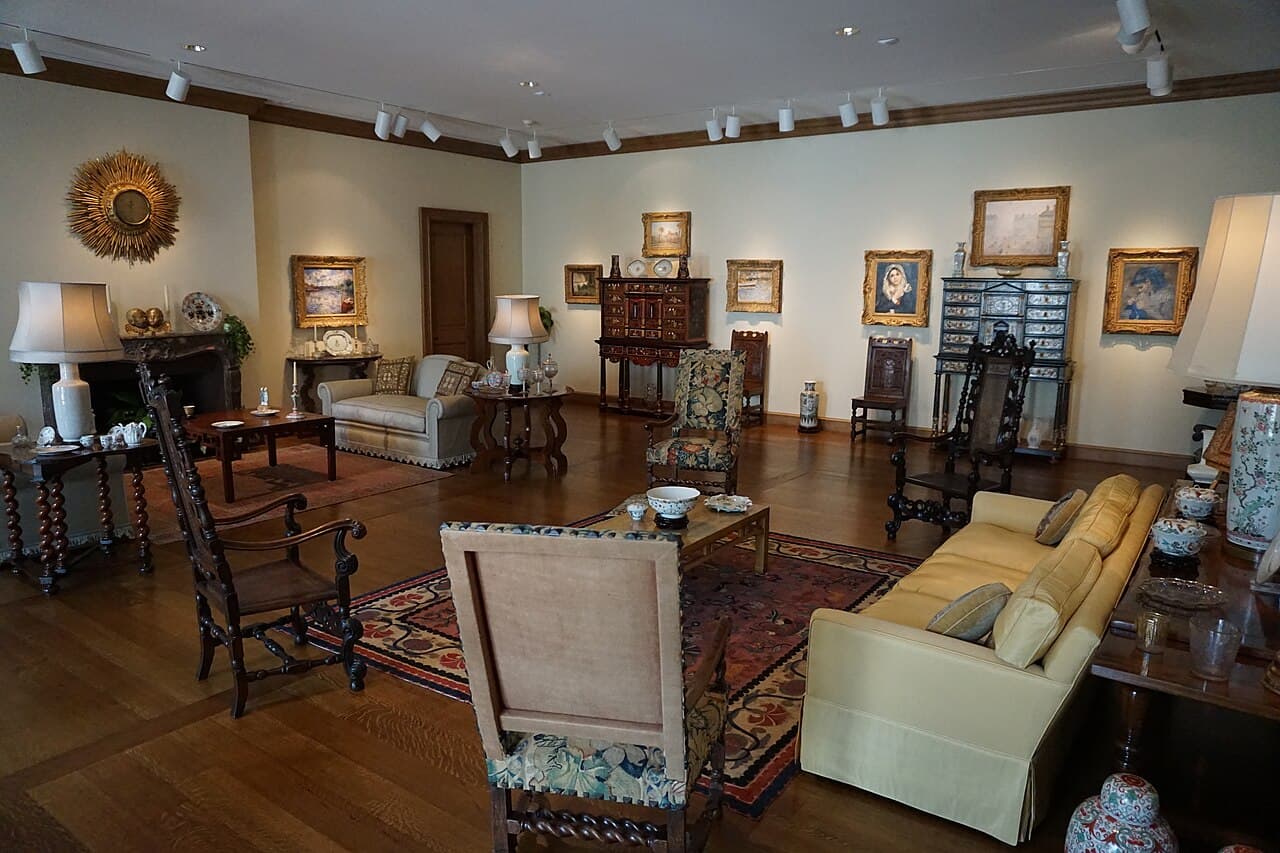
Michael Barera · CC BY-SA 4.0
The most interesting art market story in America this spring didn't happen in New York. It happened on the second floor of the Fashion Industry Gallery in downtown Dallas, where approximately 90 exhibitors from 18 countries spent four days in April doing something that most art fairs have forgotten how to do: selling art to people who actually plan to live with it.
The 18th edition of the Dallas Art Fair, which ran April 16–19, 2026, was not the biggest fair in the country. It was not the most glamorous. It did not generate the breathless social-media coverage that Art Basel Miami Beach produces each December. What it did generate was a string of sales that tells a more interesting story about where the American art market is heading — and why the answer might be southwest of the Hudson River.
## The Sales That Mattered
Start with the numbers that made dealers talk. Hollis Taggart, the New York gallery known for its deep bench of postwar American abstraction, sold a Sam Francis painting for $140,000 — a figure that would barely make a press release in Chelsea but landed with real force in a fair where relationships matter more than spectacle. Carvalho Park, showing Rachel Mica Weiss's luminous sculptural work, moved seven pieces for a combined $177,000. Jody Klotz Fine Art sold an Alice Baber — the underappreciated Color Field painter who spent decades in Judd's circle — for $120,000. Spinello Projects, the Miami gallery that has built its reputation on showing young, culturally fluent artists in contexts that feel more like happenings than exhibitions, reported selling half its stand.
These are not the kind of sales that generate headlines in Artnet or the Art Newspaper's market roundups. They are the kind of sales that sustain careers. A $177,000 weekend for Rachel Mica Weiss means studio rent, materials, and the freedom to say no to the wrong commission. A $120,000 Baber means a market correction for an artist who deserved more attention decades ago. The Dallas Art Fair doesn't trade in trophy purchases. It trades in the kind of transactions that keep the middle of the art market alive — and the middle of the art market is where most artists actually live.
## The DMA Goes Shopping
The Dallas Museum of Art used the fair to acquire six works for approximately $100,000 — a targeted buying spree that demonstrated both curatorial ambition and institutional strategy. The acquisitions included a Nicole Eisenman from Anton Kern Gallery, a Caroline Monnet from Blouin Division, and a Raymond Saunders from Andrew Kreps Gallery. Each purchase filled a specific gap in the DMA's collection; each came from a gallery that doesn't normally exhibit in Texas. The fair, in other words, functioned exactly the way fairs are supposed to function for museums: as a concentrated opportunity to see work that wouldn't otherwise make it to Dallas, from dealers who wouldn't otherwise make the trip.
Six works for $100,000 is a modest budget by museum standards. But the DMA's approach — targeted, deliberate, focused on artists who are building significant bodies of work rather than chasing market heat — mirrors the collecting philosophy of the city itself.
## The Quilt
The most talked-about object at the entire fair was not a painting. It was a quilt.
Elsa Hansen Oldham, a Texas-based textile artist, showed a large-format quilt that mapped Texas identity through its most iconic figures — Beyoncé, David Koresh, Donald Judd, Selena, Willie Nelson, Ann Richards — stitching them into a single fabric with the same matter-of-fact ambition that Texas itself uses to hold its contradictions together. The quilt was priced at $18,000. It sold quickly. And it generated the kind of booth-to-booth conversation that most art fairs only dream about: people standing in front of a textile object and arguing, with genuine passion, about what it means to be Texan.
The genius of the piece was its refusal to editorialize. Beyoncé and David Koresh occupy the same quilt not because they're equivalent but because they're both, undeniably, products of the same state. The quilt doesn't judge. It maps. And the map is more honest than most paintings about what Texas actually contains.
## Kelly Cornell and the Relationship Thesis
"Dallas is a place where you can make a strong foothold in the South," Kelly Cornell, a New York–based advisor who has attended the fair for years, told me during the preview. The observation is precise. The Dallas Art Fair has never tried to compete with Frieze or Art Basel on scale. Its competitive advantage is specificity: a collector base that is tight-knit, well-informed, and — crucially — loyal.
Dallas collectors grow with their artists. They don't flip. They build collections the way other people build friendships — slowly, with loyalty, and with genuine emotional investment. The Art Newspaper noted that "Texas's relationship-driven collecting community" is the fair's defining feature, and Cultured magazine profiled "5 Collectors on the Texas-Sized Hospitality at the Heart of Dallas's Art Scene." The consensus was uniform: this is not a fair for impulse buyers. This is a fair for people who know what they want because they've been looking for years.
## Tessa Granowski and the Nature of Things
One of the most compelling stories at this year's fair wasn't in the main booths at all. Tessa Granowski, a Brooklyn-born dealer who relocated to Dallas, runs Nature of Things — a nomadic gallery that stages pop-ups in unconventional spaces across the city. At the fair, Granowski was a constant presence: hosting dinners, connecting collectors with artists, and talking about her upcoming show in Deep Ellum titled "Minor Regional Artists" — a title that references both the Dallas Nine (the mid-century painters who put Texas on the art-historical map) and Larry McMurtry's famous essay about the provinciality of Texas letters.
The show, Granowski says, will feature artists who have chosen to work in Texas rather than leave for the coasts — a decision that the New York art world still treats as career suicide and that Granowski treats as a deliberate, even radical, creative choice. Her relocation from Brooklyn to Dallas is itself a version of the argument: the infrastructure is here, the collectors are here, and the cost of living allows artists to actually make work instead of spending all their time paying rent.
## The Parallel Fair
Three miles from the Fashion Industry Gallery, the Dallas Invitational ran concurrently at the Rosewood Mansion on Turtle Creek — a smaller, invitation-only affair that positioned itself as a complement rather than a competitor. The Invitational drew a handful of galleries that preferred the intimacy of a historic mansion to the convention-floor layout of the main fair. The two events, taken together, suggest a city that can sustain multiple models of art commerce simultaneously — a sign of market maturity that most American cities outside New York haven't achieved.
## What It Means
The Dallas Art Fair is not trying to be Frieze New York. It doesn't need to be. What it offers instead is a model for how regional fairs can thrive by leaning into their specificity rather than aping the conventions of the international circuit. The collectors are real. The relationships are deep. The sales sustain artists rather than inflating them. And the fair itself — compact, walkable, social in a way that megafairs stopped being years ago — functions as a gathering for a community that exists year-round, not just during fair week.
The next stop on the Texas art-fair circuit is Untitled Art Houston in October — a very different fair in a very different city, but connected to Dallas by the same collector networks and the same conviction that Texas is building something the rest of the country hasn't caught up to yet. For more on the Dallas scene beyond the fair, our Dallas art guide covers the Arts District, the Design District, and Deep Ellum.