Lichtenstein in Dallas: The DMA-Nasher Gift
Lichtenstein Foundation gifts 50+ works to the DMA and Nasher. The biggest joint acquisition in Dallas art history.
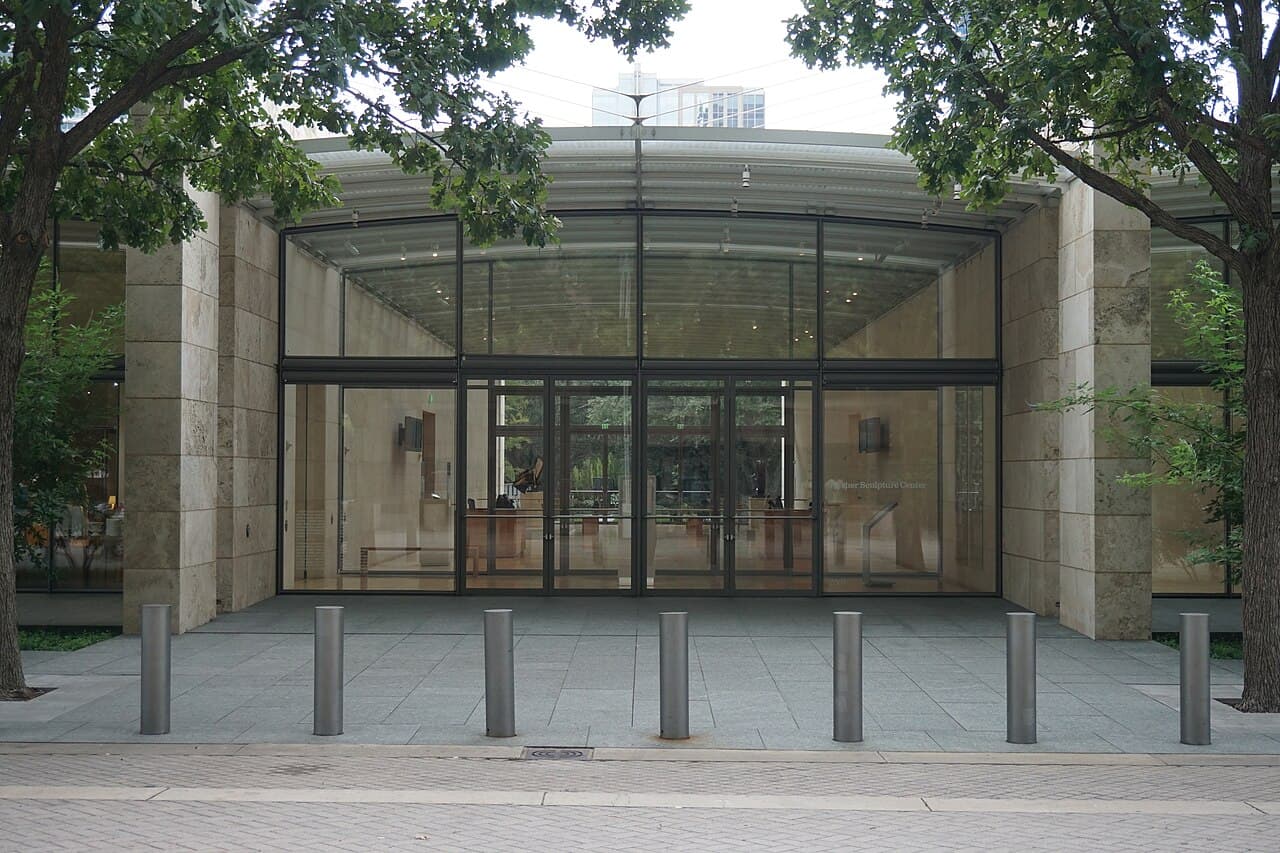
Michael Barera · CC BY-SA 4.0
Two institutions that share a sidewalk in the Dallas Arts District now share a collection. In early 2026, the Roy Lichtenstein Foundation gifted more than 50 works to the Dallas Museum of Art and the Nasher Sculpture Center jointly — prints, drawings, maquettes, and sculpture spanning nearly four decades of the Pop Art giant's career. Glasstire called the resulting exhibitions "New Perspectives," and the phrase fits. This is less a retrospective than a rethinking: Lichtenstein not as a maker of Ben-Day dot paintings (though those are here too) but as a restless sculptor, draftsman, and studio experimenter whose process was far more physical than his cool, graphic surfaces suggest.
## Nasher: "Lichtenstein in the Studio"
The Nasher's exhibition, "Lichtenstein in the Studio," pairs Foundation works with pieces already in the Nasher Collection and focuses on what most people don't associate with Lichtenstein at all: three-dimensional work. The Brushstroke series is the anchor. These are sculptures that translate the gestural swoosh of an Abstract Expressionist brushstroke into painted and patinated bronze — a Pop Art joke that doubles as genuine formal investigation. What makes the Nasher show revelatory is the inclusion of preparatory drawings and maquettes that trace each sculpture from first sketch to finished object. You can watch Lichtenstein think in real time: a loose pencil drawing becomes a collage study, the collage becomes a small painted maquette, and the maquette becomes a six-foot bronze that somehow manages to look spontaneous despite months of planning.
The curatorial decision to show process alongside product is smart. Lichtenstein's sculptures have always suffered from being overshadowed by the paintings, and the preparatory material makes an argument that the three-dimensional work isn't a sideline — it's the laboratory where many of his formal ideas were tested before they appeared on canvas. The Nasher's intimate scale works in the show's favor. You're close to the maquettes, close enough to see pencil marks and paint drips and the hesitations that the finished bronzes smooth over.
## DMA: Brushstrokes in Wood and Prints
Across the street, the DMA takes a complementary approach. Here the Brushstroke sculptures appear in wood — carved, painted, monumental — alongside a survey of Lichtenstein's printmaking practice. The prints are a revelation for anyone who knows Lichtenstein only from museum walls. His lithographs, screenprints, and woodcuts are technically ambitious and often more playful than the paintings, experimenting with color registration, surface texture, and the productive tension between mechanical reproduction and the artist's hand. The DMA's installation gives the prints room to breathe, hung at a scale that lets you see the grain of the paper and the slight misregistrations that prove a human was involved.
## Joint Study Day and the Dallas Arts District Context
On March 28, the two institutions co-hosted a Joint Study Day that brought curators, academics, conservators, and collectors together to examine the gift's implications — not just for Lichtenstein scholarship but for the institutional model of shared acquisitions. The panel discussions addressed questions that rarely get asked in public: How do two museums with different missions — one encyclopedic, one focused on sculpture — divide a single artist's output? How do conservation protocols differ when a drawing lives in one building and the sculpture it studies for lives next door? The Study Day was a rare moment of institutional transparency, and the audience included graduate students, museum professionals, and collectors who flew in from New York and Los Angeles specifically for the event.
The Dallas Arts District context matters. The DMA, the Nasher, the Crow Museum of Asian Art, the AT&T Performing Arts Center, and the Meyerson Symphony Center all sit within a few blocks of each other in what is already one of the largest contiguous arts districts in the country. The Lichtenstein gift makes an implicit argument that the district's institutions function better as a network than as standalone attractions — that a collector or scholar visiting one should walk next door to the other. The shared sidewalk becomes a shared intellectual space.
For Dallas, which has long been perceived as the Texas city where wealthy people buy art rather than make it, the Lichtenstein gift offers a different narrative. This isn't about purchasing power. It's about institutional seriousness — about two museums making a case, together, that Dallas deserves a permanent seat at the table of American Pop Art scholarship. And with more than 50 works now in permanent collections that charge no admission, the case is open to anyone willing to walk in.
Both exhibitions are on view through fall 2026. The DMA is always free. The Nasher is free on the first Saturday of each month and $10 otherwise. For the full scope of what's happening in Dallas right now, our complete guide to the Dallas art scene covers the Arts District, the Design District, and Deep Ellum.