Marfa Complete Guide: Art, Food, and Desert
Marfa complete guide: Chinati, Ballroom, Judd Foundation, Prada Marfa, where to eat, and where to stay.
Awebre6 · CC BY-SA 3.0
There are places you visit and places that rearrange the way you think about art. Marfa is the second kind.
Population 1,700. One stoplight. A single grocery store. The town sits in the Chihuahuan Desert of Far West Texas, 190 miles southeast of El Paso, 60 miles north of the Mexican border, at an elevation of 4,830 feet. The air is dry and thin. The sky is enormous. The light — and this matters, because it's the reason everything happened here — is unlike anything you've experienced in a city. It moves across surfaces slowly, changing the character of objects over the course of a day in ways that feel almost theatrical. Donald Judd noticed this light in 1971, and it changed the course of American art.
## Why Marfa
Judd was already one of the most important artists in America when he first drove through West Texas. He'd shown at the Whitney, the Museum of Modern Art, Leo Castelli Gallery. He was a central figure in Minimalism. But he was deeply unhappy with how his work was being shown. New York galleries were too small. Museum exhibitions were temporary — his large-scale works would be installed for a few months, then crated and stored. The fluorescent lighting was wrong. The crowds were wrong. Everything about the commercial gallery system offended his conviction that serious art needed permanent, purpose-built space.
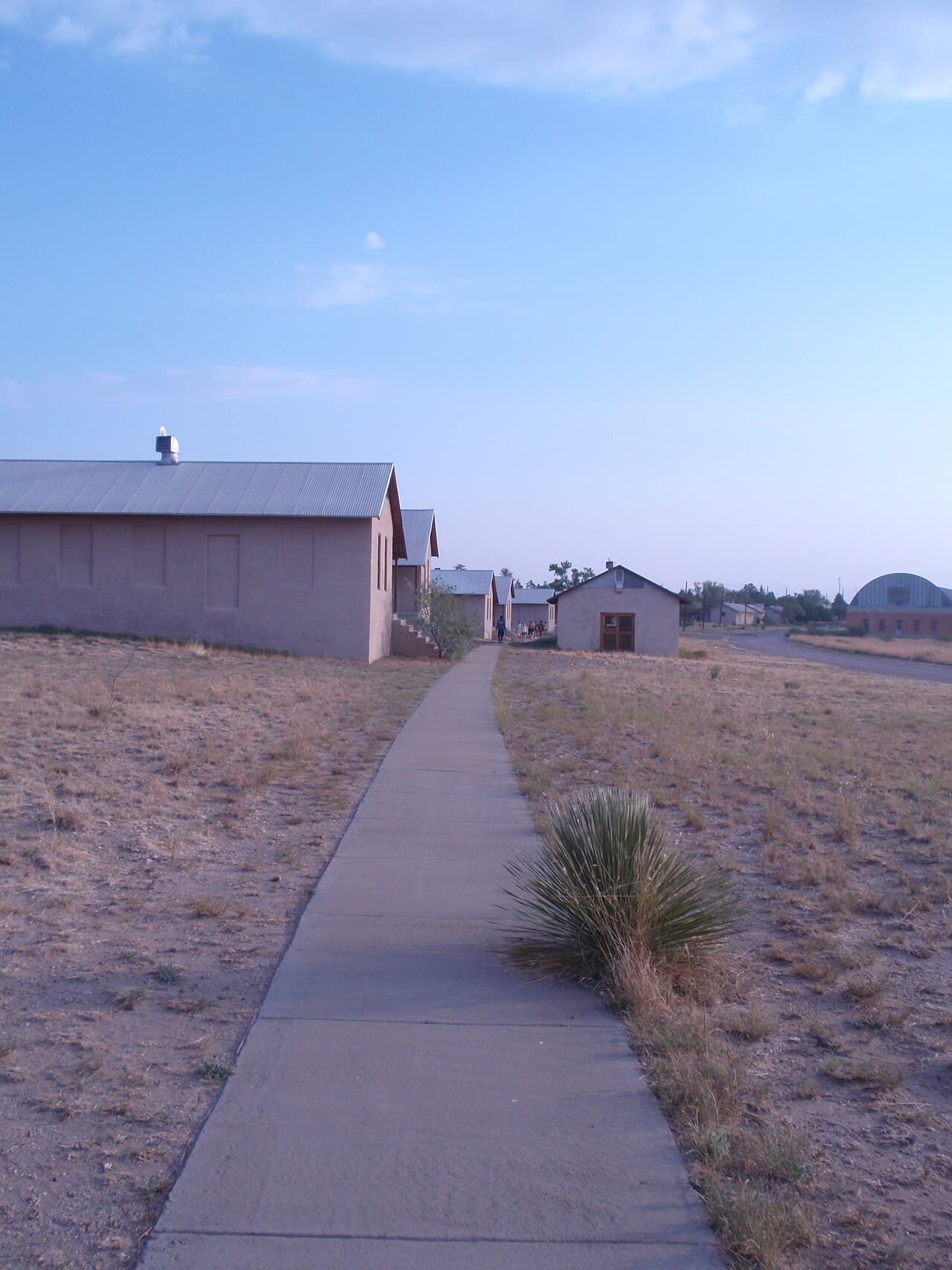
He arrived in Marfa in 1971. He bought a house. Then another house. In 1973-74, he purchased the buildings that would become La Mansana de Chinati — the Block — an entire city block of adobe and former military structures in downtown Marfa. Then, with funding from the Dia Art Foundation, he acquired the decommissioned Fort D.A. Russell, a 340-acre former U.S. Army cavalry post on the southern edge of town. He spent the next two decades transforming it into the most radical experiment in permanent art installation the country had ever seen.
Judd died in February 1994, at 65. The art stayed. Every installation he placed remains exactly where he put it. The buildings he renovated still stand. The desert light still moves through the clerestory windows of the artillery sheds exactly as he intended. And Marfa — a town that had been slowly depopulating since the military left — became a pilgrimage site for anyone serious about contemporary art.
## The Art
### Chinati Foundation
Three hundred and forty acres of permanent installations on the grounds of the former Fort D.A. Russell. This is the reason most people come to Marfa, and it deserves a full day.
The anchor: Judd's 100 milled aluminum boxes, installed permanently in two converted artillery sheds. Each box is approximately 41 by 51 by 72 inches. Each is unique in its internal proportions — open tops, closed tops, interior dividers at varying heights. The sheds are vast, with clerestory windows running the length of both buildings. As the light shifts from morning to afternoon, the boxes transform. Surfaces that appeared matte become reflective. Interior shadows migrate. The experience at 9 AM is categorically different from the experience at 4 PM. Nothing in a photograph prepares you for this. Plan to spend at least an hour here.
Dan Flavin's permanent installation occupies six former barracks buildings — the largest permanent Flavin installation in the world. Each barrack contains a different configuration of fluorescent tubes in green, pink, yellow, and blue. The architecture becomes a vessel for colored light. It is overwhelming and almost impossibly beautiful.
Robert Irwin's "untitled (dawn to dusk)" is a freestanding building of Irwin's own design with translucent scrim walls that filter desert light from sunrise to sunset. The interior is empty except for the light itself, which moves across the scrims in slow gradients. Arguably the most purely beautiful work of art in Texas.
John Chamberlain's 25 crushed-automobile sculptures fill a former wool warehouse — monumental works made from compressed, painted, and welded car bodies. Claes Oldenburg and Coosje van Bruggen's "Monument to the Last Horse" stands on the grounds.
Visiting: Guided tours only, 2-3 hours. Book well ahead at chinati.org. Limited group sizes. Tours fill up, especially on weekends and during Chinati Weekend.
### Ballroom Marfa
A non-collecting contemporary art museum in a converted 1927 dance hall on San Antonio Street, founded in 2003 by Fairfax Dorn and Virginia Lebermann. Ballroom doesn't collect — it commissions site-specific work, hosts film screenings, music performances, and residencies. The current exhibition is "Los Encuentros," curated by Maggie Adler, featuring five Latinx artists from across the Southwest. The programming is adventurous and intellectually rigorous. Free admission, always. Check ballroommarfa.org before you go.
### Judd Foundation
Separate from Chinati, the Judd Foundation preserves Judd's personal living and working spaces.
The Block (La Mansana de Chinati): Judd's residence, occupying a full city block in downtown Marfa. Two large hangars for art, a two-story former U.S. Army Quartermaster Corps building converted into his home. Adobe walls built using local construction methods. Interior courtyard with cactus gardens. A 13,000-volume library. Art from the 1960s and 70s installed permanently. And the furniture — read our full piece on Judd's living spaces — which he designed himself because he couldn't find anything worth buying.
Architecture Studio: Recently reopened after a seven-year restoration by Schaum Architects. One of the most intimate spaces in Marfa.
Art Studio: Where Judd worked. Everything placed with the same intention he brought to the aluminum boxes.
Tours by appointment at juddfoundation.org/visit/marfa/.
### Prada Marfa
The most photographed artwork in Texas, and one of the most misunderstood. A permanent sculpture by the artist duo Elmgreen & Dragset — a life-sized replica of a Prada boutique, stocked with real shoes and handbags from Prada's Fall/Winter 2005 collection. The handbags have no bottoms. The shoes only fit right feet. The door doesn't open.
It sits on US Route 90, 26 miles northwest of Marfa toward Valentine, alone in the desert. Opened October 1, 2005. Vandalized on opening night. Rebuilt with shatterproof windows and alarmed inventory. Originally meant to decay into the landscape. Instagram made it immortal. Read the full story of Prada Marfa.
Free. Always. Pull over on the shoulder.
### More Art
Marfa Open: Nonprofit gallery with rotating exhibitions, residencies, and an annual art festival. marfaopen.art.
Chinati Weekend: The 39th annual edition runs October 9-11, 2026. Self-guided tours of the full campus, artist talks, benefit dinner under the stars. Hotels sell out months ahead. Our complete Chinati Weekend guide has everything you need to plan.
## Where to Eat
Marfa's food scene is small but genuine. More places are open Thursday through Sunday than during the week. Make reservations at the fine dining spots — the town fills up on weekends.
Cochineal: The fine dining destination. Miso-glazed black cod, seasonal menu that changes with what's available. Intimate room, serious wine list. Reservations essential, especially on weekends. 107 W San Antonio St.
LaVenture at Hotel Saint George: Fried Texas quail, el pastor street tacos, wood-fire oven. The design is contemporary and clean — the nicest room in town. Good for a slower meal with cocktails. 100 W San Antonio St.
Marfa Burritos: The Gordo burrito — beans, cheese, chorizo, potatoes — is the local institution. Lines of travelers and locals, particularly at breakfast. Cash-friendly. Closes early. 112 S Highland Ave.
Bordo: Italian deli and bakery using stone-milled heirloom flours. Fresh pasta, seasonal gelato, sandwiches from wood-fired bread. Small and excellent. 200 S Abbott St.
Big Bend Coffee Roasters: Organic, fair trade, small-batch roasted daily. Twenty single-origin options. The coffee is legitimately great, not just great-for-a-small-town great. 110 W San Antonio St.
Pro tip: Eat well on Thursday through Sunday. On Monday through Wednesday, your options narrow significantly. Plan accordingly.
## Where to Stay
Hotel Saint George: The three-star downtown option and the couples' favorite. Room service, 24-hour front desk, a genuinely good restaurant downstairs. Modern and comfortable without being sterile. 100 W San Antonio St.
Thunderbird Hotel: Operating since 1959, reinvigorated by Lake Flato Architects in 2005. Pool, garden, outdoor fireplace. Mid-century bones with design intelligence. The classic Marfa stay. 601 W San Antonio St.
El Cosmico: The original bohemian campground — vintage trailers, yurts, tepees — is closed. A new 60-acre development by Liz Lambert in partnership with ICON (the Austin-based 3D printing company) and Bjarke Ingels Group (BIG) is debuting in 2026. It will be the world's first 3D-printed hotel. The architecture alone will be worth the trip. Watch elcosmico.com for opening dates.
Book all accommodations well in advance, especially for Chinati Weekend in October.
## The Desert
### Stargazing
Marfa sits within the Greater Big Bend International Dark Sky Reserve — 15,000 square miles, the largest in the world, and the first to cross an international boundary (the reserve extends into the Sierra del Carmen in Mexico). DarkSky International certified. On a clear night, the Milky Way is not a suggestion — it's a structural feature of the sky. If you've never seen truly dark skies, this will recalibrate your understanding of what "night" means.
### Big Bend National Park
A 2.5-hour drive south — the largest protected area of the Chihuahuan Desert in the United States. The Chisos Mountains, the Santa Elena Canyon, the Rio Grande. If you have a third day, drive down. The scale of the landscape is humbling in a way that even Chinati's 340 acres can't prepare you for.
### The Marfa Mystery Lights
First documented in 1883 by cowhand Robert Reed Ellison, who assumed they were Apache campfires. They weren't. Glowing orbs that appear to hover, split, merge, and vanish above the desert floor southeast of town. A dedicated viewing platform sits on US-90, 9 miles east of Marfa. Open 24 hours, 365 days a year. Free.
Scientific explanations range from atmospheric refraction of distant car headlights to piezoelectric effects from geological stress. None are fully satisfying. The lights don't appear every night, but when they do, they're genuinely uncanny. Worth a half-hour at the platform after dinner, especially on a clear night.
## The Culture Beyond Art
Marfa Book Company: Independent bookstore, publisher, and project space, now in its third decade. The collection is curated with real intelligence — art monographs, poetry, desert studies, Northern Mexico history and culture. A small gallery space hosts rotating exhibitions. The bookstore also produces programming that has become integral to Marfa's cultural calendar: Agave Festival Marfa (a weeklong celebration of agave cultures of the Chihuahuan Desert), In Front of Us Film Series (films by women), and Desert Encrypts (improvisational music in the desert). 105 S Highland Ave. marfabook.com.
## Getting There
Midland-Odessa Airport (MAF): 2.5 hours northeast. The most common fly-in option.
El Paso Airport (ELP): 3 hours west. Better airline options, longer drive.
From Houston: 8 hours driving, or fly to Midland.
From Austin: 6 hours.
From Dallas: 7 hours.
From San Antonio: 4.5 hours.
Rent a car. There is no alternative. No Uber, no Lyft, no public transit. The drive itself — especially the last two hours through the Davis Mountains and the open desert — is part of the experience. Don't fight it. Roll the windows down.
Best times to visit: October (Chinati Weekend, perfect weather), spring (wildflowers in the Chihuahuan Desert, mild temperatures), late fall (clear skies, fewer crowds). Summer is hot — highs above 100 — but uncrowded, and the locals appreciate the visitors who come anyway. Winter nights drop below freezing; the stars are extraordinary.
## The Bottom Line
Plan at least two nights. Three is better.
Day 1: Chinati Foundation. Book the full guided tour. This is why you came.
Day 2: Ballroom Marfa in the morning. Judd Foundation tours (the Block, the Architecture Studio) in the afternoon. Prada Marfa on US-90 before or after — it's a 30-minute drive each way. Town galleries in the late afternoon.
Day 3: Big Bend National Park day trip, or a long desert drive through the Davis Mountains, or simply a slow morning — coffee at Big Bend Coffee Roasters, the Marfa Book Company, a late breakfast burrito, departure.
Marfa is the opposite of the art fair model. There is no VIP lounge, no champagne preview, no opening-night strategy. The art has been here for decades. It will be here after you leave. It doesn't need your attention — but it rewards it completely. The installations are permanent, the desert is patient, and the town asks only that you slow down enough to actually see what Judd saw when he drove through in 1971 and decided to stay.
For our earlier Marfa coverage: Marfa on a budget and the Chinati Weekend 2026 guide.