Texas Gallery & FotoFest: End of an Era in Houston
Houston lost two art-world titans in one year. Texas Gallery and FotoFest shaped decades of culture. Now what?
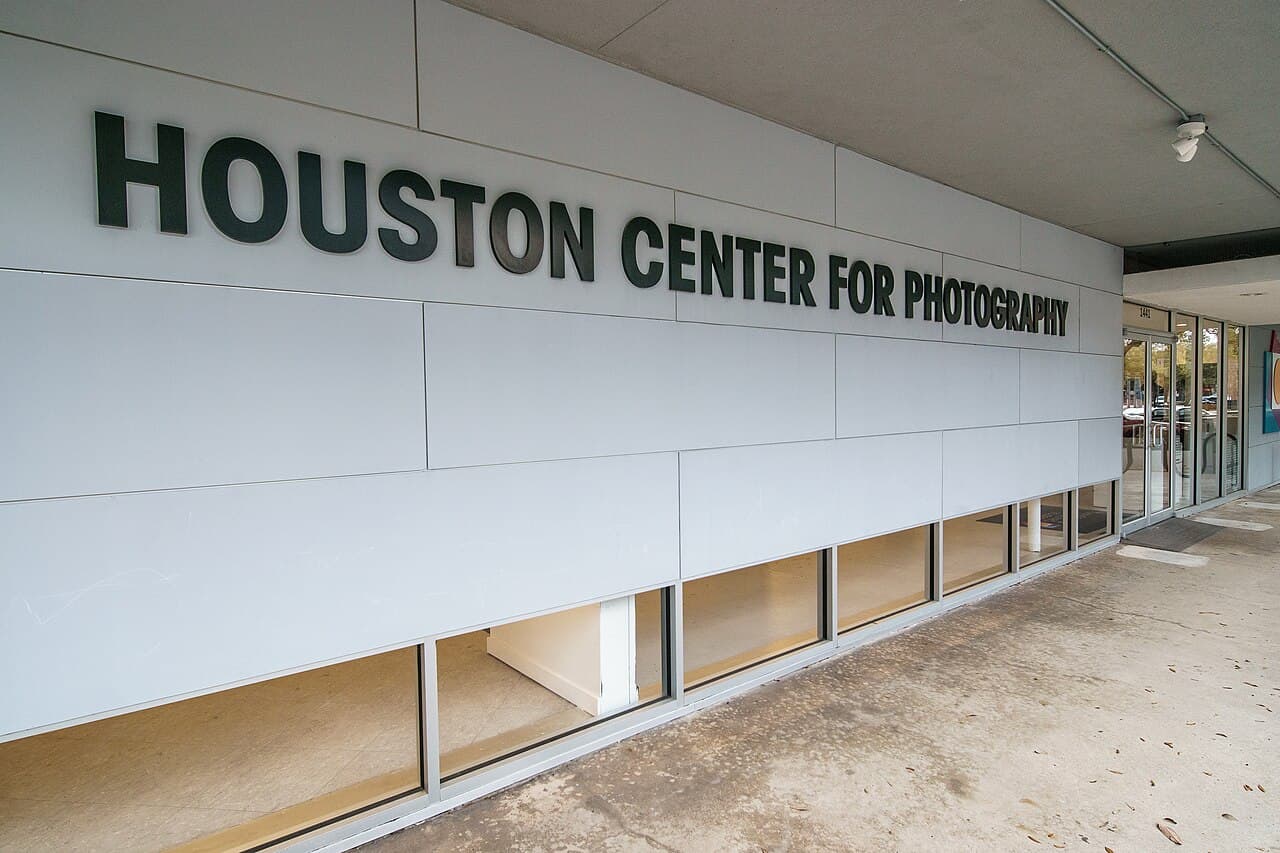
Kenneth C. Zirkel · CC BY 4.0
In February 2026, Fredericka Hunter closed Texas Gallery. She was 80 years old. The gallery had been open for 54 years at 2012 Peden Street. It was the first Houston gallery to show Ed Ruscha, Chuck Close, Brice Marden, and William Wegman. It hosted six solo exhibitions of Robert Rauschenberg between 1987 and 2007. It showed Lynda Benglis from 1972 onward, Richard Serra, Pat Steir, Rackstraw Downes, Joel Shapiro, Lee Friedlander. It was, by any honest accounting, one of the galleries that made Houston a serious art city.
A few weeks later, Wendy Watriss curated what will be her last FotoFest biennial — "Global Visions: FotoFest at 40" — and began stepping back from the organization she co-founded in 1983. She's 83. She has been the artistic force behind one of the most influential photography biennials in the world for four decades.
Texas Monthly profiled them together under the headline "Two Women Shaped the Houston Art World for Decades. Now They're Stepping Down." The framing was correct. These are not parallel stories — they are the same story: a generation of women who built Houston's cultural infrastructure from the ground up, who made their bets in a city that wasn't yet on the global art map, and who stayed long enough to see the map change.
## Fredericka Hunter and the Gallery That Named Itself
Hunter grew up in Galveston. She earned her BFA in art history from the University of St. Thomas in Houston in 1970, where she studied with Dominique de Menil — who was, in Hunter's words, using the university "as a kind of private artistic fiefdom." After graduating, she joined Contract Graphics, a prints gallery, and helped transform it into something more ambitious. Ed Ruscha's exhibition — the gallery's first real show — went up in 1971. Ruscha himself suggested the name change: Texas Gallery.
What followed was half a century of programming that consistently outpaced the city's reputation. Hunter and her partner, Ian Glennie — a Rice School of Architecture graduate — didn't just show art. They hosted the first Houston performances of Philip Glass and Joan Jonas. They created ARTPIX, an experiment in commissioning young artists on CD. They turned their Roy Street residence, which Glennie had designed using industrial metal exterior, into a performance space. The gallery wasn't just a room with paintings. It was a proposition: that Houston could be a place where the most interesting art in the world was shown, sold, and discussed, and that it didn't have to apologize for not being New York.
Six Rauschenberg solos. Lynda Benglis for 50 years. Serra. Steir. Close. These aren't names a regional gallery typically holds for decades. But Hunter held them, because the program was real and the relationships were deeper than transactions.
"I was thinking how one should never stick around too long," she told Glasstire when the closing was announced in February. The gallery has transitioned to online sales and estate management. The website still shows an archival slideshow running from the 1971 Ruscha show through the final exhibitions.
And now Revolver Galeria occupies 2012 Peden Street, running a Latin American contemporary program in the space that Texas Gallery built. The address carries its history like a geological layer. Our review of Revolver's inaugural show "Nomos" tells the story of what the space has become. But what it was — for 54 years — is worth remembering.
## Wendy Watriss and the Biennial That Opened the World
Watriss's story is equally improbable. Born in 1943 in San Francisco — her father a career diplomat, her mother a prominent socialite and philanthropist — she studied philosophy and English literature at NYU, spent time in Madrid and Paris, and became a photojournalist whose work took her from Vietnam veterans' communities to Sub-Saharan Africa. In 1982, she became the first woman to win both the World Press Feature Award and the Leica Oskar Barnack Award, for a photo essay on Agent Orange published in Life magazine.
She met the photographer Fred Baldwin in 1969 in Manhattan. Their first collaboration was "Backroads of America," a 1971 road trip documenting Texas. They moved to Houston and, in 1983, co-founded FotoFest with Petra Benteler, a German-born dealer who operated one of the first photography galleries in the country. The first biennial launched in March 1986, timed to Houston's sesquicentennial.
FotoFest became one of the most important photography events in the world — not "one of the most important in Texas" or "in the South," but in the world. The biennial's portfolio review program, which connects emerging photographers with international curators, editors, and gallery directors, has launched careers across five continents. Watriss developed over 60 exhibitions during her tenure and positioned Houston as a global convening point for the photographic image.
Fred Baldwin died on December 15, 2021, at 92. He had entered Picasso's home in southern France in 1955 and taken portraits that launched his career. The partnership — personal, artistic, institutional — had lasted more than fifty years.
The 40th anniversary biennial, "Global Visions," ran March 7 through May 10, 2026, at Sawyer Yards and across 85 participating spaces in Houston. It presented key works from all 20 previous biennials — more than 450 artists from 58 countries. A 600-page book co-published by Schilt Publishing accompanies the exhibition. Steven Evans, who has served as FotoFest's executive director since 2014, continues to lead the organization.
## What Gets Left Behind
The temptation is to frame these departures as losses. And they are — the specific curatorial intelligence, the personal relationships, the institutional memory that Hunter and Watriss carry can't be transferred to a successor. You don't hand over 54 years of knowing which artist to show next, or 40 years of knowing which photographer from Bamako is about to change the conversation.
But the infrastructure remains. The MFAH is running three blockbuster exhibitions simultaneously. CAMH continues to program at a level that would be impressive in any city. Revolver Galeria and RUBY Projects are building something new on Peden Street and in the Museum District. Untitled Art Fair is bringing 95 galleries from 20 countries this October. The Affordable Art Fair launches its inaugural Houston edition two weeks later. Opera Gallery chose Houston for its first Texas location. The city that Hunter and Watriss helped build is still being built.
What's different is that the people doing the building are now working in a city that takes its own art scene seriously — a city that knows it belongs on the global map, rather than one that's still making the argument. Hunter and Watriss made that argument for decades, when it wasn't obvious, when it wasn't fashionable, and when the only evidence was the art on the walls and the photographs on the screens.
They won. The argument is over. Houston is an art city. The question now is what it does with that fact — and the answer, in 2026, is more interesting than it has ever been.
Fredericka Hunter's archival catalog is available at texasgallery.com. FotoFest's 40th anniversary publication is available at fotofest.org. Our complete guide to Houston's gallery landscape in 2026 maps what the scene looks like now.