Review: Tracey Rose at Ruby City
Tracey Rose returns to San Antonio with TKO and 62 unseen drawings at Ruby City. A career-defining show.
By RedDot Texas
Rubycityart · CC BY-SA 4.0
Tracey Rose has returned to San Antonio — the city where, years ago, an Artpace residency helped shape the multidisciplinary practice that would make her one of South Africa's most important contemporary artists. The exhibition at Ruby City is not a retrospective in the traditional sense. It is a focused, intense return to a formative period — the residency that gave Rose the space and support to develop work that would establish her international reputation. The result is an exhibition that feels both deeply personal and urgently contemporary.
The centerpiece is TKO (2000), the video performance that established Rose on the international stage. The work is raw, physical, confrontational — a performance in which Rose uses her own body as the site of struggle, endurance, and transformation. Seeing it in the context of the Artpace residency that produced it adds layers of meaning that are unavailable when encountering the work in a biennial or museum survey. Here, in the city where it was made, the piece carries the weight of its own history.
Alongside TKO, the exhibition presents 62 drawings from the same period — many exhibited for the first time. These are not preparatory sketches or minor works. They are a revelation: intimate, detailed, and charged with the same intensity that characterizes the video performances. The drawings reveal a side of Rose's practice that has been largely invisible to the public — a sustained engagement with mark-making and the page that runs parallel to the more visible performance and video work. For anyone who thinks they know Rose's practice, these drawings will force a reconsideration.
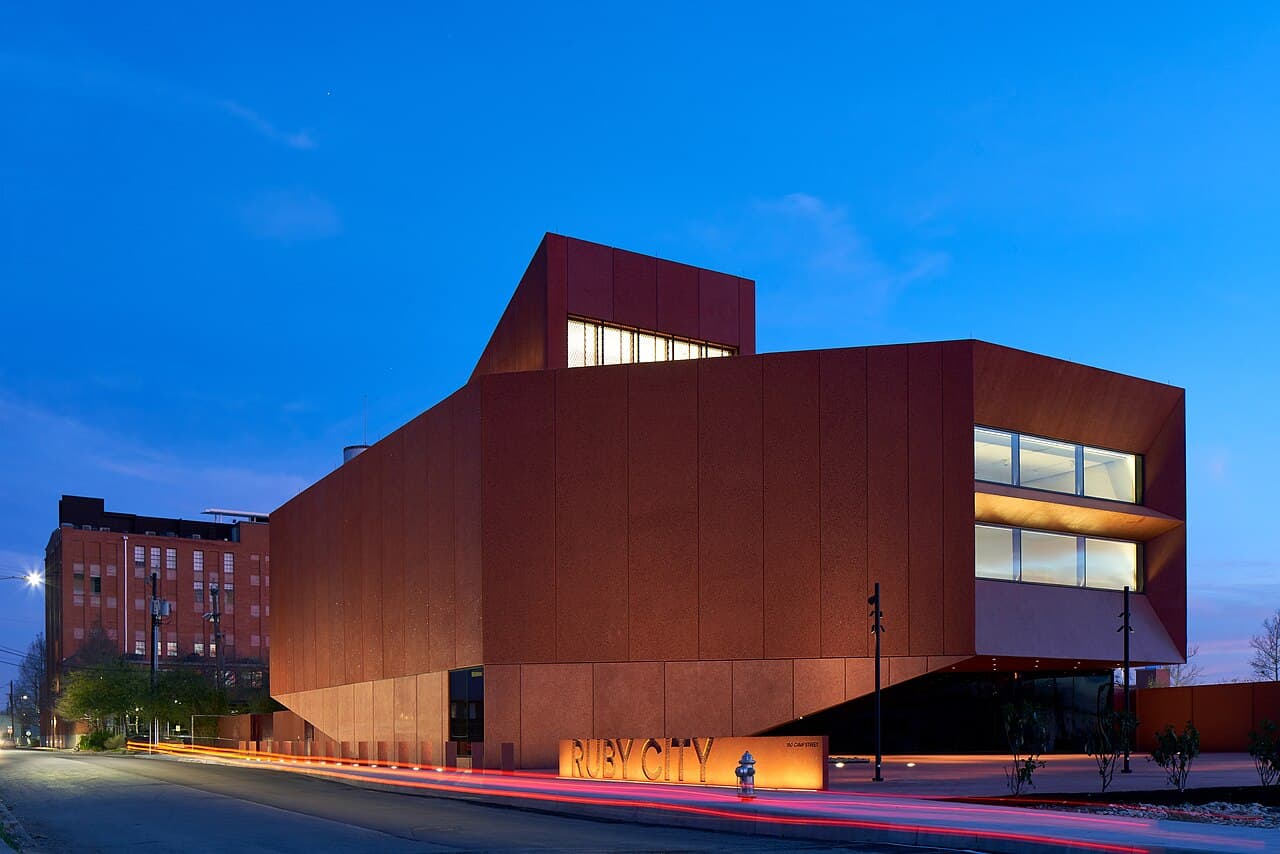
David Adjaye's Ruby City is a building that was designed for exactly this kind of encounter. The intimate galleries, with their warm-toned concrete walls and carefully controlled natural light, create a space that is simultaneously monumental and personal. The building does not overwhelm the work — it frames it, holds it, and creates the conditions for sustained attention. Walking through the Rose exhibition in these spaces feels like entering a conversation that demands your full presence.
Rose's practice spans performance, video, and photography, and the common thread is a fearless confrontation with race, gender, sexuality, and post-apartheid identity. She does not make comfortable work. She makes work that insists on the body as a political site, that refuses to separate the personal from the historical, and that challenges viewers to sit with discomfort rather than seeking easy resolution. The San Antonio exhibition captures this quality with particular intensity because of the intimacy of the setting.
The San Antonio connection is central to the story. Linda Pace founded Artpace as a space where international artists could come to San Antonio, live and work for extended periods, and develop new projects in dialogue with the city and its communities. The residency program has been a launchpad for international careers — and Rose's trajectory is one of the most powerful examples. That her work now returns to a building created by Pace's vision (Ruby City houses the Linda Pace Foundation's collection) creates a narrative arc that feels almost too perfect — the artist's homecoming to the ecosystem that first supported her.
Ruby City is the ideal home for this kind of fearless, challenging work. The museum is always free — there is no financial barrier to encountering art that pushes boundaries. This matters. Work like Rose's needs to be accessible, not gated behind ticket prices that filter audiences. The Pace Foundation's commitment to free admission is a statement about who art is for, and it aligns perfectly with the democratic urgency of Rose's practice.
The exhibition runs through May 2027, making it one of the longest-running shows in Texas right now. There is no excuse not to see it. Visit the Ruby City event page for hours and directions, and while you are in Southtown, walk to Artpace — the building where this story began — to see what's currently on view. The two institutions are minutes apart, and visiting both in a single trip creates a powerful narrative about the role of artist residencies in shaping careers and communities.