Austin Art Guide: The Complete 2026 Scene
Austin art is deeper than its reputation. The Blanton, 500 open studios, and a corridor selling prints from $200.
Larry D. Moore · CC BY 4.0
Austin is a music city. That's the first thing anyone says, and it's true. But underneath the live-music capital branding and the SXSW mythology, there's an art scene that has been quietly building institutional depth, grassroots energy, and national credibility for decades. The Blanton Museum of Art holds nearly 21,000 works. The East Austin Studio Tour draws 60,000 people each November. A feminist gallery founded in 1978 had its archives acquired by the Smithsonian. And on Springdale Road, you can buy an original print for $200 from a working press that's been pulling editions for years.
This is the complete guide — institutions, studios, street art, and the places to eat between gallery visits.
## The Institutions
The Blanton Museum of Art is the largest university art museum in the United States, with a collection of nearly 21,000 works spanning antiquity to the present. It sits on the University of Texas campus at 200 E Martin Luther King Jr Blvd, and its current exhibitions are among the strongest in Texas this summer.
"American Modernism from the Charles Butt Collection" brings Edward Hopper, Georgia O'Keeffe, Ellsworth Kelly, Jacob Lawrence, and Alma Thomas together in a survey of 20th-century American art that draws from one of the most significant private collections in the state. "Run the Code: Data-Driven Art Decoded" features Refik Anadol, teamLab, Jenny Holzer, Rafael Lozano-Hemmer, and Leo Villareal — artists working at the intersection of algorithms, generative AI, and sensory experience.
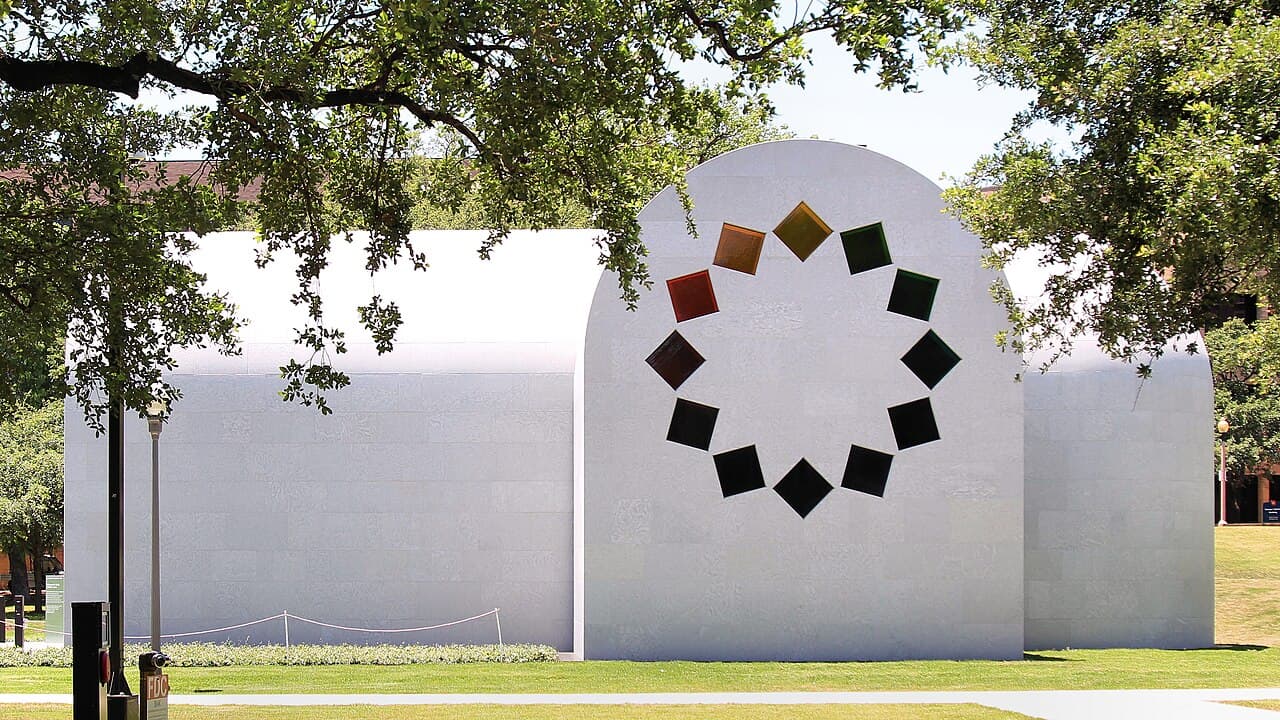
But the Blanton's permanent masterpiece is Ellsworth Kelly's "Austin" — his final work, designed in 2015 and opened February 18, 2018, three years after his death. It is a freestanding stone building: 2,715 square feet, 1,569 limestone panels quarried in Alicante, Spain, with 33 mouth-blown glass windows fabricated by Franz Mayer & Co in Munich. The windows use color grid, starburst, and tumbling squares motifs. Kelly was a lifelong atheist who built something that feels like a chapel without being one — transcendence without religion, achieved through light and stone alone. It stands in the tradition of the Rothko Chapel in Houston and the Matisse Chapel in Vence, France, but unlike those spaces, Kelly's building IS the artwork. There is nothing inside it but light. It is free, always open, and requires no tickets. You just walk in. It may be the best free art experience in Texas — and in a state with the Menil Collection, that is saying something.
The Contemporary Austin operates two locations: the Jones Center downtown at 700 Congress Ave and the Betty and Edward Marcus Sculpture Park at Laguna Gloria — 14 acres on Lake Austin with the restored 1916 Driscoll Villa. The sculpture park includes permanent works by Ai Weiwei, Terry Allen, Carol Bove, and Nicole Eisenman. Currently on view: Laura Lit's museum debut, with large-scale sculptural forms occupying the grounds through January 2027, and Sable Elyse Smith's "Clockwork", exploring systems of incarceration through sculpture, video, and neon.
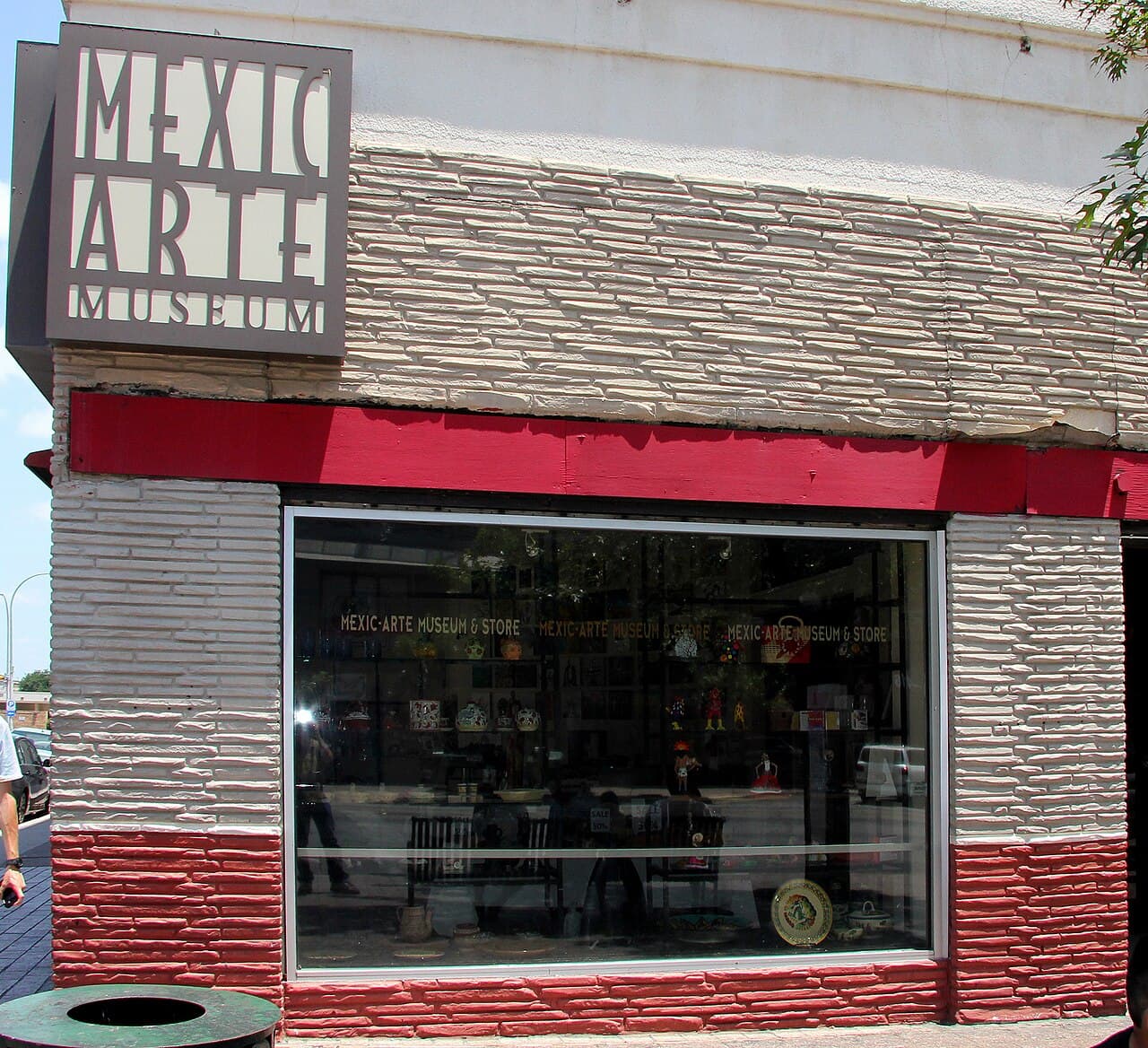
The Mexic-Arte Museum, on Congress Avenue since 1984, is the Official Mexican and Mexican American Fine Art Museum of Texas — designated by the state legislature. It hosts 80 events annually, and its Dia de los Muertos festival is one of the largest in the nation: a month-long celebration with lowrider parades, traditional and contemporary altars, music, and food. Currently showing "Rosas y Revelaciones" — wearable and textile works from 16 Mexican states, exploring devotion, identity, and innovation through garments inspired by La Virgen de Guadalupe.
## East Austin & The Studio Tour
Canopy Austin is the anchor of East Austin's creative corridor. At 916 Springdale Road, the complex occupies almost four acres in a former Goodwill warehouse, housing 45 artist studios, three galleries, a cafe, and creative offices. Inside: Ivester Contemporary, one of the most respected exhibition programs in the city; Modern Rocks Gallery, specializing in rock-and-roll photography; Yard Dog, championing folk and outsider art for decades; and WYLD Gallery, the only gallery in Austin dedicated exclusively to Native American contemporary art. Third Thursday gallery walks draw crowds monthly. Open Canopy first Saturdays, 1-4pm, offer studio visits with working artists. For the full East Austin breakdown, our Springdale Road guide covers every space in detail.
The Austin Studio Tour (formerly EAST — the East Austin Studio Tour) is the single most democratic art event in Texas. It started in 2003, founded by Jana Swec, Joseph Phillips, and Shea Little with just 28 studios. Today it includes 500+ artists and draws 60,000 attendees over two weekends in November. Big Medium, the nonprofit that originally organized it, eventually dissolved. The artist-run collective Almost Real Things took the helm, keeping the event's grassroots DNA intact. Anyone can participate. The scale is staggering — the map alone covers dozens of pages — and the experience of driving from studio to studio across the east side, encountering oil paintings, welded sculptures, and experimental video in converted garages, is unlike anything else in the state.
Women & Their Work is one of the most important cultural institutions in Texas, and most people outside Austin have never heard of it. Founded in 1978 by Rita Starpattern, Deanna Stevenson, and Carol Taylor as a six-week women's arts festival, it drew 20,000 people that first year. They kept going. The organization received the first NEA grant in visual arts ever awarded in Texas — in 1981. Over 46 years, it has developed the careers of more than 2,000 women artists through hundreds of exhibitions, music and dance events, film festivals, and education programs. In 2020, the Smithsonian Archives of American Art acquired their archives — 43 years of history preserved permanently. Our full profile tells the story. The gallery today, on East Cesar Chavez, hosts monthly exhibitions of emerging female artists. The space is modest — not a museum, not a blue-chip gallery. That's the point.
## Street Art
The HOPE Outdoor Gallery is Austin's iconic graffiti park reborn. The original site began in 2010 on an abandoned Baylor Street construction site and became one of the most photographed spots in the city. It closed in 2019 for luxury condos. In November 2025, HOPE reopened at a 17-acre site near Austin-Bergstrom airport — 6,000 square feet of indoor gallery space plus outdoor mural walls, 30+ artists, free and open to the public.
Beyond HOPE, Austin has more than 200 documented public murals citywide. The highest concentrations are in East Austin, along South Congress, and in the 2nd Street District. The murals aren't just decoration — they're part of the city's visual identity, the street-level counterpart to the institutional art inside the Blanton and the Contemporary.
## Where to Eat Near the Art
Cenote on East Cesar Chavez — coffee and brunch, a few blocks from grayDUCK Gallery. Paperboy on East Cesar Chavez — breakfast near the Canopy complex. South Congress restaurants are within walking distance of Yard Dog and the Jones Center. The art and the food are interleaved in Austin in a way that encourages all-day wandering rather than a single gallery visit.
## Getting There
Austin-Bergstrom International Airport is 20 minutes from East Austin and 25 minutes from the UT campus and the Blanton. From Houston: 2.5 hours. From San Antonio: 1.5 hours. From Dallas: 3 hours. The best way to see art in Austin is to rent a bike or scooter — East Austin is flat and bikeable, and you'll cover more ground than you would in a car stuck in Austin traffic.
For the East Austin gallery scene specifically, the Ellsworth Kelly deep dive, or Deborah Roberts's story, follow the links. Austin's art scene rewards the visitor who goes beyond the obvious — and the obvious, in a city this obsessed with music, is surprisingly easy to miss.